
For people with diabetes, exercising is a great way to keep blood sugar levels in check! In addition to blood sugar control, it has many other benefits as well, including increasing energy levels, improving heart health, and promoting emotional well-being (DLife Editors, 2017). Exercising is essential in not only controlling diabetes, but also in the prevention of diabetes-related complications such as cardiovascular disease (DLife Editors, 2017).
What does exercise entail though? Do you need to go buy a gym membership immediately and hire a personal trainer? NO! Anything that gets you moving is exercise! The important thing is to include more movement in your daily routine and to stay consistent!

But… How much physical activity should you be doing?
The American Diabetes Association (2015) recommends:
30 minutes of moderate-to-vigorous intensity aerobic exercise at least 5 days a week or a total of 150 minutes per week
Moderate intensity: you are working hard enough that you can talk, but not sing, during the exercise
Vigorous intensity: you cannot say more than a few words without pausing for a breath during the exercise
Spread your physical activity out over at least 3 days of the week
Don’t go more than 2 days in a row without exercising
Some type of strength training at least 2 times per week in addition to aerobic exerciseA
What is aerobic exercise?
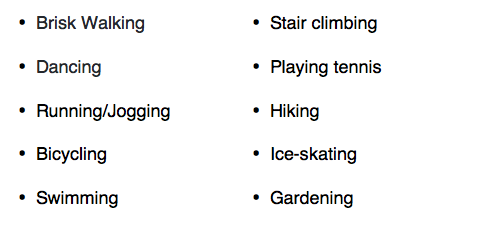
Another term for aerobic exercise that you may be more familiar with is cardio! Aerobic exercise or cardio requires the heart to pump out and deliver oxygenated blood to working muscles (Weil, 2017). During aerobic exercise, you can expect your breathing and heart rate to increase.

Some examples of aerobic exercises are:
What is strength training?
Strength training is a type of exercise that uses resistance in order to build strength and endurance. It helps to maintain and build strong muscles, as well as preventing muscle loss (American Diabetes Association, 2015). The resistance used in strength training can be an object, your own body weight, resistance bands, or resistance from machines (Andrews, 2018).

Some examples of strength training exercises:
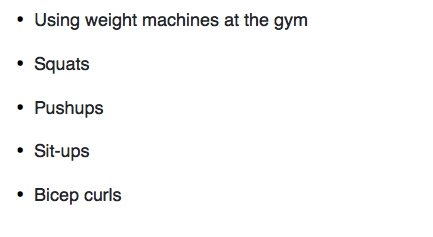
If you have a gym membership, that’s great. But as you can see, so many of these exercises can be done at home and can easily fit into your daily routine! If you want to incorporate weights into your work outs but you don’t own any, you can just substitute them with ordinary objects like canned goods or water bottles. As mentioned earlier, 30 minutes of exercise at least 5 days a week is recommended, but these 30 minutes can also be broken up into bouts of 10 minutes or more and would be just as effective (American Diabetes Association, 2015). Exercising doesn’t have to be as intimidating as it may sound sometimes. What’s important is to get moving, and to stay moving!
























 Don't Sugarcoat It